Choosing the best entry door for global buyers in 2026 requires more than comparing appearance and price. An entry door affects security, weather resistance, indoor comfort, maintenance, and long-term energy use. The International Energy Agency reports that buildings consume roughly 30% of global final energy, making envelope performance an important purchasing concern. Door selection alone cannot solve building inefficiency. However, it can reduce drafts, moisture problems, and repeated replacement costs when specified correctly.
Fiberglass doors suit buyers seeking low maintenance and stable performance in changing climates. Steel doors provide strong security and competitive pricing, but exposed edges can rust in coastal environments. Timber doors offer warmth and repairability, yet they need careful finishing in humid regions. Aluminum systems can perform well when they include thermal breaks and suitable glazing. Look for tested air leakage, water penetration, structural performance, and thermal values, rather than relying on marketing language. ENERGY STAR guidance and NFRC certification offer useful reference points for comparing rated products, especially in markets with established testing systems.
Details matter. A door facing heavy rain needs a sloped sill, sealed frame, and correctly positioned overhang. A busy apartment entrance needs durable hinges, accurate hardware, and easy replacement parts. That assumption can fail. A highly insulated slab may still perform poorly if installers leave gaps around the frame. Global buyers should also verify local fire, accessibility, security, and climate requirements before ordering. The best entry door is not always the most expensive model. It is the one whose materials, testing, installation method, and service support match the building’s real conditions.
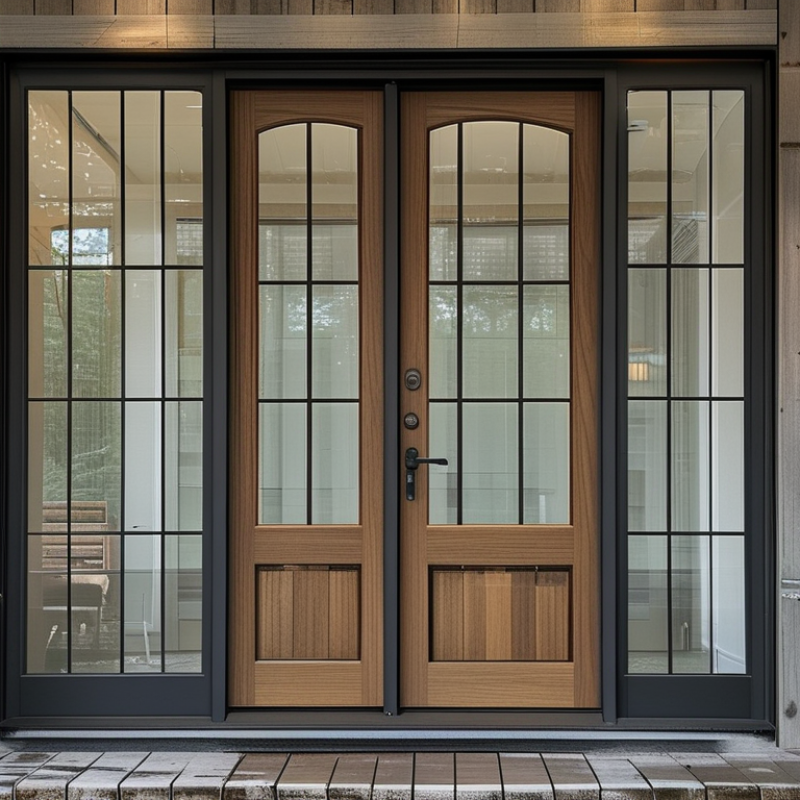
For global buyers in 2026, a suitable entry door must perform beyond a showroom photograph. Real projects reveal the difference. It should resist local weather, support reliable security hardware, and remain easy to operate for children, older adults, and visitors. That balance matters in coastal homes, dry inland areas, and neighborhoods with sharp seasonal changes. Climate comes first.
During site reviews, I check the wall opening, sill drainage, hinge position, and exposure to direct rain. A well-built door can still fail when installation leaves gaps around the frame. Buyers should request documented U-values, air-leakage data, material composition, and maintenance instructions. Independent test reports make comparisons more reliable than attractive finish samples. Still, data is not everything. A door with excellent insulation may feel unsuitable if its threshold creates a trip risk.
Global suitability also depends on adaptable sizing and replacement access. Standard dimensions are not truly standard everywhere. Before ordering, confirm opening measurements, swing direction, delivery protection, and installer capability. Use corrosion-resistant hardware near salt air, but avoid assuming one material fits every climate. Some decisions remain imperfect. A heavier door may improve stability, yet it can be difficult for daily users. I would rather accept a modest finish than ignore a poor seal, difficult threshold, or unavailable replacement part. Regional safety, energy, and accessibility requirements should also be checked before production, because a technically strong door may still need local adjustments.
| Door type | Typical construction | Typical thermal performance* | Climate suitability | Security potential | Maintenance requirement | Typical service-life range** | Relative installed cost | Best fit for global buyers |
|---|---|---|---|---|---|---|---|---|
| Fiberglass composite | Fiber-reinforced polymer skins over an insulated foam or engineered core | Generally good; insulated systems commonly achieve approximately 1.0–2.0 W/m²K, depending on glazing, frame, and installation | Suitable for humid, coastal, hot, cold, and high-UV regions when the coating and seals are correctly specified | High potential with a reinforced frame, multi-point locking, laminated glazing, and tested hardware | Low; periodic cleaning, seal inspection, and hardware adjustment are normally sufficient | Approximately 20–40 years, subject to exposure, construction quality, and maintenance | Medium | A balanced option for buyers who need low maintenance, thermal efficiency, and broad climate compatibility |
| Insulated steel | Galvanized or corrosion-protected steel skins around a foam or honeycomb core | Good when thermally broken and insulated; commonly approximately 1.2–2.2 W/m²K for a complete door system | Strong choice for cold and temperate climates; coastal and high-humidity areas require robust anti-corrosion protection | Very high potential because of the rigid leaf and compatibility with reinforced locks and security hardware | Low to medium; scratches and exposed edges should be repaired promptly to limit corrosion | Approximately 15–30 years, with longer life possible under protected conditions | Low to medium | Security-focused projects, apartments, utility entrances, and markets where value and durability are priorities |
| Solid timber | Natural hardwood or softwood panels, often built as stiles, rails, and joined panels | Variable; approximately 1.8–3.5 W/m²K is common unless the leaf is engineered or combined with an insulated core | Excellent in dry and moderate climates; needs careful sealing and detailing in wet, tropical, or highly variable climates | High potential with sufficient thickness, strong joinery, a reinforced frame, and certified locking hardware | Medium to high; requires finish renewal, moisture control, and periodic checking for movement | Approximately 20–60 years, depending heavily on species, finish, weather exposure, and maintenance | Medium to high | Premium architectural projects, heritage-style homes, and buyers prioritizing natural appearance and repairability |
| Engineered timber | Laminated or finger-jointed timber layers designed to improve dimensional stability | Generally better and more stable than basic solid timber; approximately 1.2–2.5 W/m²K depending on core and frame | Suitable for cold, temperate, and many humid climates when factory-finished and correctly sheltered | High potential with a dense core, reinforced frame, multi-point lock, and security-rated glazing where applicable | Medium; finish inspection and resealing remain important, especially on exposed elevations | Approximately 25–50 years, depending on design, finish, installation, and exposure | Medium to high | Buyers seeking timber aesthetics with improved dimensional stability and more predictable performance |
| Thermally broken aluminum | Powder-coated or anodized aluminum profiles separated by low-conductivity thermal barriers | Good with a thermal break and insulated glazing; approximately 1.3–2.5 W/m²K for many complete systems | Very suitable for hot, humid, windy, and high-UV regions; coastal locations require an appropriate corrosion-resistant finish | High potential with robust profiles, concealed or multi-point locking, and properly specified glazing | Low; clean surfaces, check drainage paths, and inspect gaskets and hardware periodically | Approximately 30–50 years, depending on coating quality, hardware, and environmental exposure | Medium to high | Modern buildings, large glazed entrances, high-wind areas, and buyers requiring slim profiles with low maintenance |
| uPVC / vinyl | Multi-chamber extruded polymer profiles with insulated panels or double/triple glazing | Generally good; approximately 1.0–2.0 W/m²K is achievable with insulated panels or energy-efficient glazing | Suitable for temperate, cold, and humid climates; high heat and intense UV require a formulation and color designed for the region | Medium to high when reinforced and paired with quality locking hardware; configuration varies significantly by system | Low; routine cleaning and periodic inspection of seals, hinges, and locks are normally required | Approximately 20–35 years, depending on UV exposure, hardware, profile quality, and installation | Low to medium | Cost-sensitive residential projects where thermal insulation, weather resistance, and easy cleaning are important |
Choosing an entry door starts with climate, security needs, and daily use. Solid timber doors offer warmth, strong insulation, and a natural grain. However, they need careful sealing in humid or rainy regions. Steel doors provide excellent strength and stable performance, but poor insulation can create cold surfaces. Fiberglass doors resist moisture and usually require less maintenance. Glass entry doors bring daylight into narrow halls, while laminated or frosted panels improve privacy and safety. Pivot doors create a dramatic entrance, yet they need accurate installation and enough clearance.
Tips: Check the door’s thermal rating, frame depth, drainage design, and hardware quality. Ask for test data, not only attractive photographs. Measure the opening twice. Small errors can affect sealing, alignment, and long-term comfort.
For apartments and urban homes, insulated steel or fiberglass doors often balance security, maintenance, and cost. Large timber doors suit villas and traditional architecture, especially when the finish matches local weather conditions. Sliding entry systems can save space, but their tracks need regular cleaning. A wider door is not always better. It may increase weight, energy loss, and installation difficulty. No design is perfect. Buyers should review wind exposure, rainfall, sunlight, and replacement access before ordering. A practical door should look inviting, close quietly, and remain reliable after years of daily use.
Comparing Materials, Security, Energy Efficiency, and Durability
Choosing an entry door is a climate decision, not only a style decision. The GlobalABC 2024 Global Status Report states that buildings used 32% of global energy and produced 34% of global CO2 emissions in 2023. The IEA’s Energy Efficiency 2023 report also places buildings near 30% of global final energy demand. A poorly sealed door adds drafts, moisture, and noise. Fiberglass offers stable insulation and resists rot. Steel provides strong impact resistance, but exposed edges can rust in coastal air. Solid timber feels warm and repairable, yet it needs careful finishing in wet climates. Composite doors can balance both, though quality varies sharply.
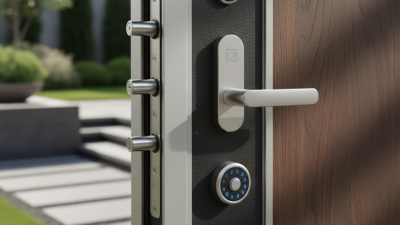
Security depends on the complete doorset. Look for a reinforced frame, protected hinges, a multi-point lock, and laminated or tempered glazing. European Standard EN 1627 classifies doorsets by resistance class and requires demanding attack tests. A heavy slab alone proves little. The frame may fail first.
Energy performance should be compared through tested U-factor, air leakage, and solar heat gain. The National Fenestration Rating Council explains that lower U-factor means less heat transfer. In hot regions, a lower solar heat gain coefficient can reduce cooling demand. In cold regions, controlled solar gain may help. Installation matters. A perfect door with an unsealed threshold still wastes energy. Universal “best” lists deserve caution. Salt air, monsoon rain, freeze-thaw cycles, and local repair skills can change the sensible choice.
2026 Best Entry Door Types for Global Buyers
Climate should decide the door before appearance does. In cold markets, choose a thermally broken frame, insulated core, low U-factor, and compression seals. The U.S. Department of Energy recommends checking U-factor and air leakage, not just material labels. A steel door can perform well, but a poorly sealed threshold will defeat it. Small gaps matter.
Hot, sunny regions need low solar heat gain, shaded entries, and finishes that resist ultraviolet exposure. Humid or monsoon markets require sloped sills, drainage paths, rot-resistant skins, and corrosion-resistant hardware. Coastal buyers should verify wind-load and salt-spray testing for local building requirements. The International Energy Agency’s 2023 Global Status Report for Buildings and Construction estimates that buildings use about 30% of global final energy. Door selection cannot solve the whole energy problem, but it can reduce avoidable leakage.
Market fit is equally important. Check local test labels, opening sizes, fire-rating rules, delivery access, and replacement-part availability. A beautiful oversized door may fail in a narrow urban entrance. For export projects, request tested U-factor, solar heat gain coefficient, water penetration, and air-infiltration results. Do not trust “all-weather” wording alone. A perfect door does not exist; the best choice balances climate, installation quality, maintenance, and budget. I would still revisit the specification after one wet season.
Comparative climate-fit scores for common entry door constructions. Scores from 1 to 5 reflect thermal insulation, moisture stability, dimensional stability, and corrosion resistance; they are planning scores, not laboratory or code ratings.
How to read the chart: Fiberglass-insulated doors provide the most balanced performance across climates. Insulated steel performs well in cold regions but needs careful corrosion protection in coastal areas. Thermally broken aluminum is suitable for hot, humid, and coastal markets, while solid wood requires more maintenance where humidity and rain are high.
A suitable entry door begins with local requirements, not appearance. Building codes may define fire resistance, thermal performance, wind loads, and accessible clearances. These rules differ between climates and jurisdictions. Buyers should request test reports that match the intended installation region. A certificate from another market may not be accepted locally.
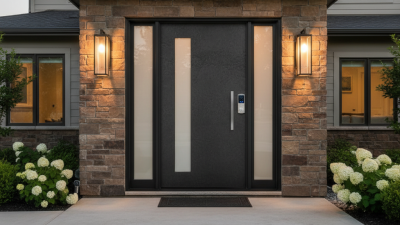
Insulated steel doors suit demanding weather and frequent use. Fiberglass doors resist moisture and often need less maintenance. Solid timber can provide warmth, but it needs careful sealing in humid or highly variable climates. Large glazed doors create daylight, yet the glass must meet safety and energy standards. Installation matters just as much as the door leaf. A poorly aligned frame can cause drafts, water entry, and uneven locking.
In 2026, buyers are showing stronger interest in low-maintenance materials, recycled content, improved thermal breaks, and access systems that support controlled entry. However, connected features should not replace mechanical reliability. Batteries fail. Networks fail. This point is still underestimated. Door selection should include hinge capacity, threshold drainage, replacement parts, and installer training. Field inspections often reveal that expensive doors perform poorly when the opening is not square. A realistic purchasing plan includes site measurements, local code review, delivery protection, and a written installation method. The most attractive specification may still need revision after climate, security, and maintenance conditions are examined together.