How to Choose an Aluminum Composite Panel Factory?
Choosing an Aluminum Composite Panel Factory is a technical decision, not merely a price comparison. Global aluminum demand is expanding, while energy use and carbon intensity remain important concerns. The International Aluminium Institute reported global primary aluminum production of approximately 70.6 million tonnes in 2023. This scale shows the material’s importance, but it does not prove that every panel supplier offers consistent quality.
A reliable factory should provide traceable alloy information, coating specifications, core details, and batch inspection records. Ask for recent test reports, not attractive samples alone. Reports should match the intended market, including relevant fire classification standards such as EN 13501-1 or ASTM E84. Requirements vary by country and building type. Verify them independently. The factory should also explain production controls, including coil pretreatment, lamination temperature, flatness inspection, and protective-film removal. Small details matter. A loose film edge can damage a finished façade during transport.
Industry research from Grand View Research identifies construction and building renovation as major applications for aluminum composite panels, reflecting steady demand for lightweight façade materials. However, market growth can encourage rushed production and aggressive claims. That risk deserves attention. A factory may hold ISO 9001 certification, yet still produce inconsistent batches if its process supervision is weak. ISO 14001 can indicate environmental management, but it is not a substitute for product testing. Visit the facility when possible, inspect its laboratory, and compare three recent production lots. No checklist is perfect. Experience, documented evidence, and honest communication usually reveal more than a polished website.
Understanding Aluminum Composite Panel Types and Applications
How to Choose an Aluminum Composite Panel Factory?
Aluminum composite panels differ by core, coating, thickness, and fire performance. Polyethylene-core panels suit interior walls, shop signs, and sheltered facades. They are lightweight and easy to cut. However, they need careful consideration in demanding exterior applications. Fire-retardant panels use mineral-filled cores. A2-rated panels offer stronger fire resistance for public buildings and high-rise projects. Still, performance depends on the complete tested system, not the panel alone.
Surface finish also changes the panel’s practical value. PVDF coatings generally support long-term exterior color retention. Anodized surfaces provide a metallic appearance and useful resistance. Interior projects may accept a simpler finish. Match the panel to sunlight, moisture, cleaning methods, and expected impact. A busy transport corridor needs different protection than a quiet office lobby. Small details matter.
When comparing factories, request samples from the proposed production line. Check flatness, coating uniformity, edge quality, and core bonding. Ask for current laboratory reports, production tolerances, and batch traceability. A dependable factory should explain its testing process without vague promises. It should also provide technical guidance for cutting, routing, fastening, and joint design. I once selected a panel by appearance alone. The color looked excellent, but the coating was unsuitable for constant sunlight. That mistake was avoidable. Factory audits, retained samples, and clear inspection records reduce similar risks. Confirm whether the factory can maintain the same specification across repeat orders. Consistency is often harder than the first delivery.
Defining Your Project’s Technical and Performance Requirements
Choosing an aluminum composite panel factory starts with your project’s technical and performance requirements. Appearance comes later.
Define wind pressure, panel span, fixing method, temperature range, and expected service life. A coastal façade may need stronger corrosion resistance and tighter moisture control. A high-rise project may require tested fire performance, dimensional stability, and reliable engineering support.
The United Nations Environment Programme reported in its 2023 Global Status Report that buildings create 37% of global energy and process-related carbon emissions. This makes thermal performance worth measuring, not guessing. Request declared core density, thermal conductivity, coating thickness, and test conditions. For fire safety, ask for reports based on the standards required in your project location. “Fire-retardant” is not a sufficient specification. It can mean different things.
Tips: Send the factory a written performance schedule. Include panel thickness, core type, alloy, coating system, color tolerance, impact class, and test standards. Request full reports, not cropped certificates. Check whether the tested assembly matches your proposed joints and subframe. Small differences matter.
A useful factory should explain limitations clearly. It should discuss wind deflection, sealant movement, drainage, and replacement access. If technical answers stay vague, pause. A cheaper panel may reduce the purchase price while increasing installation risks. That assumption should be challenged. The Aluminum Association’s technical guidance also stresses that design values depend on alloy, temper, geometry, and loading conditions. Never select panels from thickness alone.
Evaluating Factory Manufacturing Standards and Capabilities
How to Choose an Aluminum Composite Panel Factory?
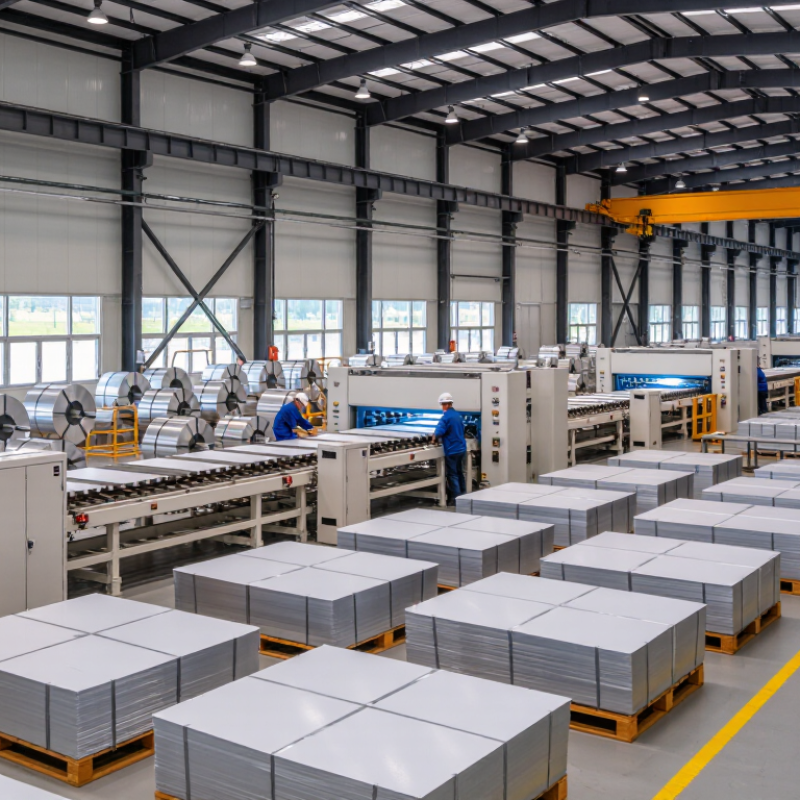
Evaluating factory manufacturing standards starts with the production floor. Check whether aluminum coils, core materials, and coatings are stored in clean, controlled areas. Moisture and dust can affect bonding quality. Ask to see incoming material records, batch numbers, and inspection procedures. A reliable factory should explain its thickness tolerance, panel flatness, and coating performance clearly.
Look closely at the equipment. Continuous lamination lines usually provide more stable bonding than irregular manual processes. However, modern equipment alone proves little. Request recent test reports for peel strength, impact resistance, weathering, and fire performance. Confirm that independent laboratories issued the reports. Inspect sample panels under bright light. Uneven gloss, edge waves, or exposed core material deserve questions. Small defects matter.
Factory capability also includes quality control after production. Ask how operators measure color differences, surface temperature, and panel dimensions. Traceability should connect each finished panel to its raw materials and inspection records. A factory audit can reveal more than a polished sample room. Sometimes, documentation looks complete but lacks current dates or clear acceptance limits. That is a warning, not a minor detail. I would also compare samples from different production batches, because one excellent panel may hide inconsistent control. Request a trial order before approving a large project. Mistakes can happen. The factory’s response shows its real manufacturing discipline.
Checking Material Quality, Certifications, and Testing Procedures
How to Choose an Aluminum Composite Panel Factory?
Material quality should be checked before production capacity or delivery promises. Ask for the aluminum alloy grade, panel thickness, core type, and coating system. A reliable factory can provide batch records and clear technical data. Inspect sample edges closely. The layers should bond evenly, without bubbles, gaps, or exposed core material. Small defects often reveal weak process control.
Certifications matter, but certificates alone prove very little. Check the issuing body, validity period, covered products, and factory address. Quality management certification can show process discipline, while fire-performance reports should match the exact panel structure. Do not accept a report for a different core or thickness. Request traceable test samples and production dates. This detail is easy to overlook.
Testing procedures should include peel strength, coating adhesion, impact resistance, color consistency, dimensional tolerance, and fire behavior. Ask how often testing occurs and whether independent laboratories are involved. Watch for vague answers. A serious factory records failures and corrective actions, rather than hiding them. No checklist is perfect. Even careful buyers may miss changes in raw materials between batches, so random pre-shipment inspection remains worthwhile. A factory that welcomes questions is usually easier to evaluate.
How to Choose an Aluminum Composite Panel Factory?
A practical factory evaluation should give the greatest attention to material composition and traceability, independent certifications, and documented testing procedures. Verify aluminum alloy and thickness, core type, coating performance, fire classification, adhesion, and dimensional consistency through certificates and test reports issued against recognized standards such as EN 13501-1, ISO 2409, ISO 2808, ASTM D3359, and ASTM D7091. The percentages shown are a procurement assessment framework, not a certification result.
