Blog

What Is an H Beam Manufacturer and How to Choose One?

Choosing among H Beam Manufacturers is a practical decision with structural consequences. A reliable supplier does more than roll steel sections. It controls chemistry, dimensions, welding procedures, surface condition, and documentation. One missed detail can affect fabrication, transport, and installation.

W. Edwards Deming, a respected manufacturing quality authority, said, “Quality comes not from inspection, but from the improvement of the production process.” Although Deming was not an H-beam producer, his principle remains highly relevant. Strong H Beam Manufacturers build quality into every stage. Buyers should examine mill certificates, testing procedures, production capacity, and traceability systems. Factory photographs help, but audited records matter more.

Experience also changes the selection process. A suitable manufacturer should understand regional standards, project tolerances, coating requirements, and delivery risks. Ask how the company handles dimensional deviations. Ask for recent project references. Do not rely only on a polished website.

Price still matters. It should not lead the decision. A cheaper beam may create extra cutting, delays, or uncertain performance. That risk is easy to underestimate. Even careful buyers can miss hidden costs.

This guide explains what H Beam Manufacturers do and how to evaluate them with greater confidence. It considers technical capability, quality evidence, communication, logistics, and after-sales support. Some recommendations may need adjustment for your project. That is normal. Steel sourcing is not a checklist alone; it requires informed judgment.

What Is an H Beam Manufacturer and How to Choose One?

What Is an H Beam Manufacturer?

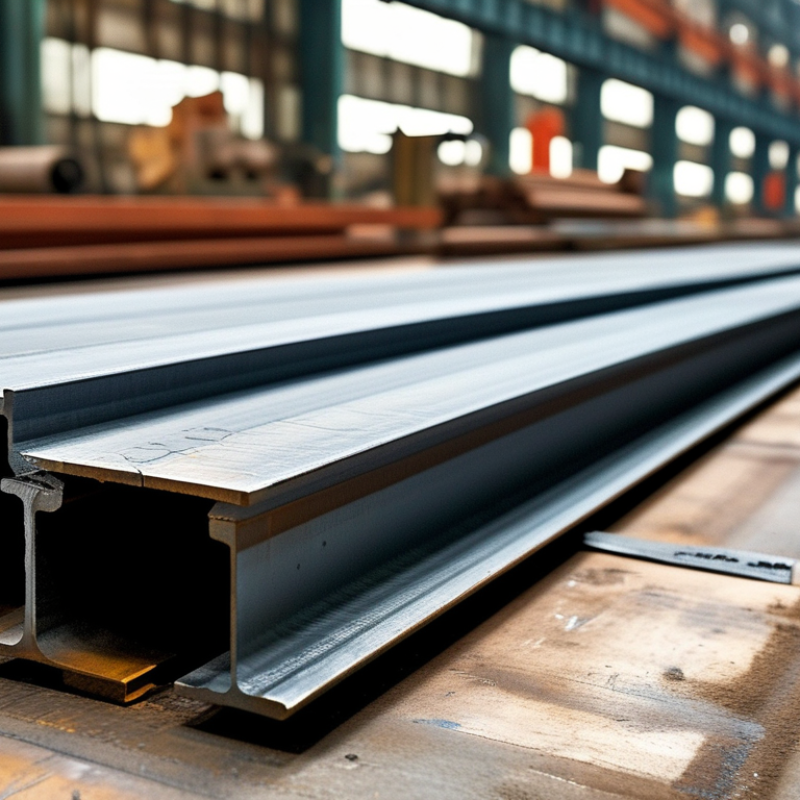
An H beam manufacturer is a company that produces structural steel sections shaped like the letter H. Its process usually includes steel selection, reheating, rolling, cutting, straightening, and inspection. The horizontal flanges resist bending, while the vertical web carries shear and keeps the section stable. These beams support columns, industrial frames, platforms, bridges, and large roof systems. They are not simply oversized steel bars.

A capable manufacturer controls more than the rolling line. Engineers check chemical composition, dimensions, flange thickness, surface condition, and mechanical strength against the required specification. Quality staff may use ultrasonic or other non-destructive tests when the project demands deeper verification. Mill certificates, heat numbers, and batch records create a traceable path from furnace to jobsite. That paperwork matters when a beam arrives with a small but costly dimensional difference. Good production experience also helps the factory notice problems before they become installation delays.

However, a polished website does not prove manufacturing competence. Buyers should ask about monthly capacity, section ranges, tolerances, testing equipment, inspection procedures, and similar projects. A factory should explain how it handles rejected material, custom lengths, protective treatment, and transport damage. Independent inspection can add confidence, especially for safety-critical structures. No manufacturer is perfect; even experienced teams can miss a detail. I would treat vague certificates and rushed answers as warning signs, not minor inconveniences. The best choice is a manufacturer that communicates limits clearly and supports technical decisions with verifiable records.

How H Beam Manufacturers Produce Structural Steel

An H-beam manufacturer converts steel billets into structural beams with parallel flanges and a connecting web. The process requires controlled heat, pressure, and dimensional accuracy. Production usually starts with chemical analysis of the raw steel. Technicians check carbon content, strength, and cleanliness before heating. This step matters. Poorly controlled chemistry can weaken later performance.

Inside the rolling mill, billets are heated in a furnace to a carefully managed temperature. Rolling stands gradually shape the red-hot steel into an H profile. The web controls shear resistance, while the flanges carry bending loads. Sensors monitor flange width, web thickness, temperature, and straightness. After rolling, cooling beds reduce heat at a controlled rate. Uneven cooling may create internal stress or slight distortion. That problem is easy to underestimate.

Manufacturers then cut beams to specified lengths and inspect their surfaces. Ultrasonic testing can identify internal discontinuities that visual checks may miss. Calibrated gauges verify dimensions, and tensile tests confirm mechanical properties. Production records should include heat numbers, test results, and inspection dates. When choosing an H-beam manufacturer, review these records, quality certifications, mill capacity, and delivery controls. Ask how rejected material is handled. Ask for sample inspection reports. A low price may reflect efficient production, but it may also hide thinner sections or weak documentation. No factory is flawless. The important issue is whether its process detects mistakes before the beam reaches a construction site.

What Is an H Beam Manufacturer and How to Choose One?

How H Beam Manufacturers Produce Structural Steel

H beam manufacturers produce structural sections by reheating steel billets, rolling them through shaped mill stands, cooling the finished profile, and checking dimensions and mechanical properties. The chart shows the mass per metre of selected HEB sections, illustrating how section size affects material usage and load-bearing potential.

Selected HEB section masses are representative values from standardized European structural-section tables, including EN 10365 dimensions. Actual product availability and tolerances depend on the applicable standard and mill.

What Services and Quality Standards Should You Expect?

An H beam manufacturer should provide more than standard steel sections. Reliable suppliers explain grade selection, load requirements, dimensions, and production limits clearly. Their services may include cutting, drilling, welding, surface preparation, protective coating, packing, and delivery coordination. Technical drawings should be reviewed before production begins. Small errors can create expensive site problems.

Quality standards must be visible in daily work. Ask for material test certificates, heat-number traceability, dimensional inspection reports, and chemical composition results. Common references include ASTM, EN, or equivalent national standards, depending on your project location. A capable manufacturer should maintain a documented quality system, such as ISO 9001. Independent inspection may also verify flange thickness, web alignment, straightness, weld quality, and surface condition. Rust marks or uneven edges deserve attention.

Tips: Request a sample inspection report before placing an order. Check whether measurements match the agreed tolerance. Confirm how rejected beams are handled. A factory visit can reveal storage conditions, calibration practices, and production discipline. Do not rely on certificates alone. In practice, communication quality matters too. If answers remain vague, project risks may remain hidden. Perfect suppliers are rare, so review their corrective actions and willingness to admit mistakes.

How to Evaluate an H Beam Manufacturer

What Is an H Beam Manufacturer and How to Choose One?

How to Evaluate an H Beam Manufacturer

Evaluating an H beam manufacturer requires more than comparing prices. Examine its production experience, engineering staff, and quality control process. A dependable manufacturer should explain how steel billets become finished beams. Ask about rolling equipment, dimensional controls, and inspection frequency.

Request material certificates, mill test reports, and clear records for chemical composition and mechanical strength. Check whether the manufacturer follows recognized standards and can meet your required beam grade, flange thickness, web depth, and length tolerance. Traceability matters. Each batch should connect to identifiable production records.

Review weld quality, surface condition, straightness, and end cutting. Small defects can create installation delays. Ask for recent project references, production samples, and independent inspection options. A factory visit can reveal practical details, such as storage conditions, rust protection, and how workers prevent mixed batches. Photos are not enough.

Delivery reliability also deserves careful attention. Confirm packaging, loading methods, shipping documents, and responses to dimensional changes. A low quotation may hide weak inspection or expensive rework. I once underestimated the value of communication during procurement; unclear drawings caused avoidable revisions. That mistake still matters. Evaluate how quickly the manufacturer answers technical questions, corrects errors, and accepts reasonable scrutiny. A suitable partner should provide evidence, not confident promises.

Which Factors Matter When Choosing the Right Supplier?

What Is an H Beam Manufacturer and How to Choose One?

Which Factors Matter When Choosing the Right Supplier?

An H-beam manufacturer produces structural steel sections through reheating, rolling, cutting, and quality inspection. A reliable supplier should explain each stage clearly. Choosing one involves more than comparing prices or browsing product photos. Request the steel grade, section dimensions, weight tolerance, and applicable standards. Mill test certificates should identify chemical composition, mechanical strength, heat numbers, and inspection results. Match these details with EN 10025, ASTM A6, or your project’s specified equivalent. Small documentation gaps can become expensive site problems.

The market scale deserves caution. The World Steel Association’s World Steel in Figures 2024 reported 1,888.2 million tonnes of crude steel production in 2023. High output does not guarantee consistent beam quality. Ask whether the supplier controls its own rolling process or purchases sections elsewhere. Check equipment maintenance records, calibration practices, and traceability from billet to finished beam. Independent inspection can verify dimensions, straightness, weld quality, and surface defects before shipment. It costs more. Sometimes it prevents far larger losses.

Price is only one filter. The World Steel Association’s Sustainability Indicators report estimates that steelmaking creates about 7–9% of global carbon dioxide emissions. Request product carbon data, recycled content, and energy information with supporting evidence. Lead time also needs testing. Ask for a production schedule, packing photographs, and a sample order before committing to large volumes. I have found that supplier promises often sound precise, yet delivery assumptions remain vague. Require written answers, even when the questions feel repetitive.

What Is an H Beam Manufacturer and How to Choose One? — Which Factors Matter When Choosing the Right Supplier?

A practical supplier-evaluation framework for structural H beams, covering technical capability, quality documentation, compliance, logistics, and commercial risk.

Evaluation Dimension What a Qualified H Beam Manufacturer Should Provide Evidence or Data to Request Why It Matters When Choosing a Supplier
Product Definition H beams are hot-rolled structural sections with parallel or tapered flanges, commonly specified by nominal depth, flange width, web thickness, and flange thickness. Section designation Mass per metre Dimensional table Section properties Clear product identification prevents errors in design calculations, purchasing, fabrication, and installation.
Applicable Standards Manufacturing and inspection should follow the standard named in the purchase order, such as ASTM A6/A6M, EN 10025, JIS G3192, or another recognized structural-steel standard. Standard edition Inspection scope Conformity statement Standards define dimensional tolerances, chemical requirements, mechanical properties, marking, and inspection procedures.
Steel Grade Availability Common structural grades may include ASTM A36, ASTM A572 Grade 50, EN 10025 S275, and EN 10025 S355, subject to mill availability and project requirements. Grade list Yield strength Tensile strength Elongation The correct grade affects load capacity, weldability, ductility, compliance, and total project cost.
Mechanical Properties The supplier should demonstrate that each heat or batch meets the specified yield strength, tensile strength, elongation, and, where required, impact-toughness values. Mill test certificate Heat number Test results Applicable test method Verified mechanical properties confirm that the beam can perform as designed under expected structural loads.
Chemical Composition Material chemistry should comply with the ordered grade, including carbon, manganese, silicon, phosphorus, sulfur, and any specified alloying elements. Heat analysis Product analysis Carbon equivalent Chemical control supports strength, weldability, toughness, and consistency between production batches.
Dimensional Accuracy Beam depth, flange width, web thickness, flange thickness, straightness, squareness, and mass should fall within the tolerance limits of the specified standard. Dimensional inspection report Calibration records Tolerance reference Accurate dimensions reduce fit-up problems, machining adjustments, connection issues, and material waste.
Production Capability The manufacturer should have suitable rolling, cutting, straightening, marking, bundling, and inspection equipment for the required section range and order volume. Section range Monthly capacity Maximum length Equipment list Capacity must match the project schedule and the required beam sizes; otherwise, split sourcing or delays may occur.
Length and Cutting Service Available supply should include standard mill lengths and accurately cut-to-length pieces when specified, with clear control of cutting allowances and end conditions. Standard lengths Cutting tolerance End squareness Proper cutting reduces fabrication time and improves material utilization at the construction site.
Weldability Support For welded structures, the supplier should provide grade-specific chemistry and carbon-equivalent information and identify any applicable preheating or welding requirements. Carbon equivalent Welding guidance WPS support Suitable material information helps fabricators select safe welding procedures and limit cracking or heat-affected-zone problems.
Quality Management A documented quality-management system should control purchasing, production, testing, nonconformities, traceability, and corrective actions. Quality certificate Process controls Audit records Inspection plan A consistent quality system is more reliable than a one-time product sample or an unsupported quality claim.
Traceability Each bundle or piece should be traceable to its heat number, grade, size, production batch, inspection records, and shipping documents. Piece marking Bundle tag Heat traceability Traceability supports acceptance inspection, problem investigation, warranty claims, and regulatory documentation.
Inspection and Testing Routine tests should be performed according to the ordered standard. Additional ultrasonic testing, impact testing, or third-party inspection may be required by the project. Test plan Laboratory accreditation Third-party inspection option Independent or documented testing provides stronger assurance for safety-critical structural applications.
Surface Condition Beams should be supplied free from harmful defects that exceed the relevant standard. Surface treatment may include untreated, shot-blasted, primed, or painted finishes if agreed. Surface condition Rust protection Coating specification Surface quality affects corrosion protection, welding preparation, appearance, and service life.
Packaging and Marking Bundles should be securely strapped and marked with size, grade, quantity, heat number, production information, and handling details. Packing photos Bundle marking Water-resistant tags Correct packaging reduces damage, loading mistakes, identification loss, and receiving delays.
Delivery Reliability The supplier should provide a realistic production and shipping schedule, including lead time, inspection time, port handling, and contingency planning. Production schedule On-time delivery history Shipping plan Late structural steel can delay fabrication, erection, subcontractors, and overall project completion.
Commercial Transparency Quotation terms should clearly identify grade, section size, length, quantity, tolerance, testing, coating, packing, delivery terms, and payment conditions. Detailed quotation Incoterms Validity period Surcharge policy A transparent quote makes total landed cost comparable and reduces unexpected charges or specification disputes.
Technical Communication The supplier should respond accurately to drawings, section schedules, standards, tolerances, certificates, and inspection requirements. Drawing review Response time Technical contact Fast, technically correct communication helps resolve specification issues before production begins.
Project Risk Level For high-risk, public, seismic, offshore, or heavily loaded projects, require stronger documentation, tighter inspection controls, and formal approval procedures. Project specification Inspection and test plan Hold points Supplier selection should reflect the consequences of material failure, not only the lowest quoted price.
Recommended Selection Priority High: grade compliance, mechanical properties, dimensional tolerances, traceability, inspection, and delivery capability.
Medium: cutting service, packaging, technical support, and payment flexibility.
Lower: appearance-related options when they do not affect structural performance.
Weighted scorecard Pass/fail criteria Total landed cost A weighted evaluation prevents a low initial price from hiding quality, schedule, compliance, or rework risks.
Practical selection rule: Choose the supplier that can consistently prove compliance with the required standard, grade, dimensions, testing, traceability, and delivery schedule. Compare suppliers using the same technical specification and total landed cost rather than price alone.
Top