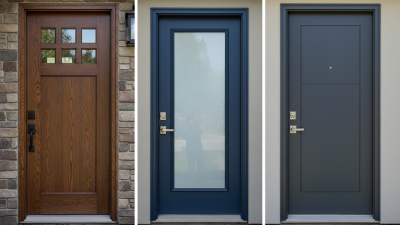
Choosing the best exterior doors from China requires more than comparing catalog photographs and factory prices. The right decision depends on climate, building codes, security needs, insulation, and after-sales support. The phrase “exterior exterior doors” may sound repetitive, yet it reflects a real buyer concern: finding durable entrance systems for demanding outdoor conditions.
Industry data supports the importance of careful selection. Grand View Research reported continued growth in the global doors market, driven by residential construction, renovation, and energy-efficiency requirements. Fortune Business Insights also identifies smart access, stronger materials, and improved thermal performance as major market trends. These reports describe market direction, not proof that every Chinese supplier performs equally well. That distinction matters.
In my experience reviewing door specifications, small details often reveal manufacturing quality. A stainless-steel threshold, sealed double glazing, reinforced hinges, and accurate powder coating can matter more than a polished brochure. Buyers should request test reports for air leakage, water penetration, wind resistance, and U-value performance. EN, ASTM, or local compliance documents should match the intended project location. Factory audits, sample inspections, and clear warranty terms add practical confidence. Still, no door is perfect. Some attractive designs sacrifice thermal efficiency, while low-cost models may weaken after repeated exposure to rain and sunlight. The best options from China combine verified performance, stable production, responsive communication, and realistic pricing. This guide examines those factors closely, while acknowledging one uncomfortable truth: supplier claims should never replace independent verification.
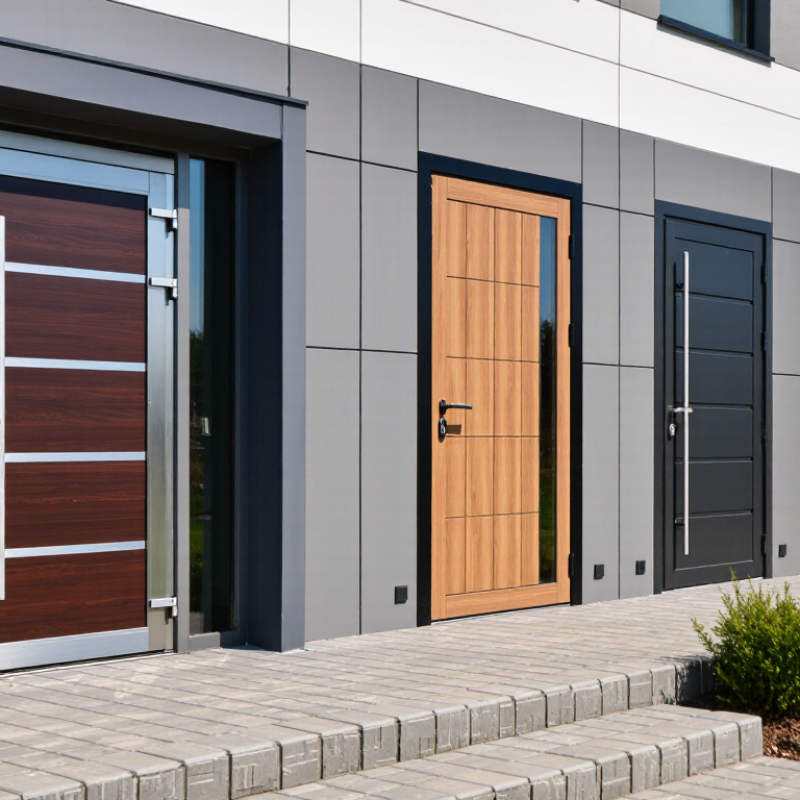
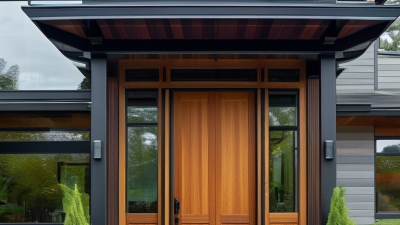
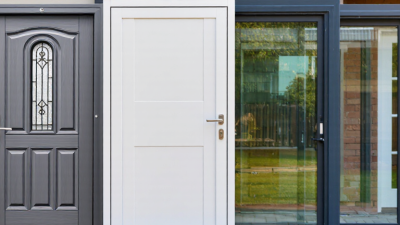
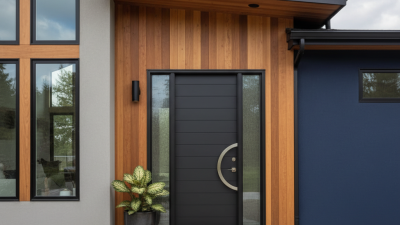
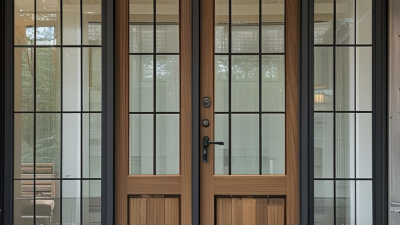
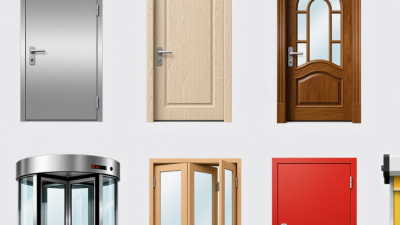
China manufactures a broad range of exterior doors for residential and commercial projects. Common types include steel security doors, aluminum doors, fiberglass doors, solid wood doors, and engineered WPC doors. Each suits a different climate and budget.
Steel doors provide strong impact resistance and often include mineral-core insulation. Aluminum doors are lighter and resist corrosion, especially when paired with thermal-break frames. Fiberglass doors can imitate wood grain while reducing maintenance. Solid wood doors offer warmth and weight, but they need careful sealing in humid regions. Fire-rated and acoustic doors are also produced, although their performance depends on verified testing, not appearance.
Market data supports this manufacturing scale. The UN Comtrade database records China as a major exporter under HS 441820 for wooden doors and frames. Recent Asia-Pacific market reviews from ResearchAndMarkets also identify the region as the largest growth area for doors. These figures show supply capacity, not automatic quality. That distinction matters.
In practical inspections, I check frame thickness, hinge reinforcement, gasket compression, drainage paths, and coating adhesion. A beautiful sample can still hide weak hardware. I have also seen thermal claims exceed real installation performance. Buyers should request test reports, cross-section drawings, moisture data, and batch photos. The best exterior door is not simply the cheapest or heaviest option. It is the type matched to local weather, security needs, and installation skill.
Comparison of representative thermal transmittance ranges for common exterior door types manufactured in China. Lower U-values generally indicate better insulation, although the final performance depends on glazing, seals, frame design, and testing standards.
Key takeaway: Insulated steel, fiberglass, and uPVC doors can provide strong thermal performance, while thermally broken aluminum doors offer design flexibility but may require advanced frame and glazing specifications to achieve comparable insulation.
When comparing exterior doors from China, material choice is only the starting point. Fiberglass resists moisture, warping, and coastal humidity. Steel provides strong security and usually supports thinner profiles. Aluminum is lightweight, but its thermal break must be continuous. Wood feels warmer and can perform well, although exposed edges require careful sealing.
The U.S. Department of Energy’s 2020 Residential Energy Consumption Survey reported that space heating used about 42% of household energy. That is not a door-specific figure, but it shows why insulation deserves attention. I would check the core density, frame insulation, threshold design, and weatherstrip compression. A thick door can still leak around its edges.
Ask suppliers for tested U-factor, air-leakage, water-penetration, and structural-load results. The National Fenestration Rating Council’s rating framework helps compare U-factor and solar heat gain consistently. ASTM E283 measures air leakage, while ASTM E331 evaluates water penetration under pressure. ASTM E330 examines structural performance. For European projects, EN 12207 and EN 12208 provide useful air and watertightness classifications. Chinese suppliers may also reference GB/T 7106, but test conditions must match the destination market. A certificate alone is not enough. Request the test date, specimen size, laboratory identity, and installation details. Small omissions here can create expensive surprises.
| Door Type | Typical Construction | Thermal Performance | Weather Resistance | Security and Durability | Relevant Standards or Tests to Request | Best-Fit Applications |
|---|---|---|---|---|---|---|
| Fiberglass Composite | Molded fiberglass-reinforced skins over a polyurethane or polystyrene insulated core, usually fitted with composite or hardwood edge members. | Generally good insulation because the core has low thermal conductivity. Typical whole-door performance should be verified by a certified U-factor or thermal-transmittance report. | Very good resistance to moisture, corrosion, denting, and many coastal conditions when the coating and hardware are correctly specified. | Stable against warping and swelling; reinforced lock areas and multi-point locking can improve resistance to forced entry. | ASTM E283 for air leakage; ASTM E330 for structural performance; ASTM E331 or AAMA 501.1 for water penetration; NFRC 100 for U-factor and NFRC 200 for solar heat-gain calculations where applicable. | Residential entrances, humid climates, coastal locations, and projects requiring a wood-like appearance with lower maintenance. |
| Insulated Steel | Galvanized or corrosion-resistant steel skins formed around a rigid foam core, with welded or mechanically fastened reinforcement and a durable painted finish. | Good insulation when the core is continuous and thermal bridges are controlled. Steel itself conducts heat, so edge details, threshold design, and thermal breaks are important. | Good resistance to wind and impact when properly coated; exposed cut edges and damaged finishes require prompt corrosion protection. | Usually provides high rigidity and strong lock reinforcement. Gauge, skin thickness, internal stiffeners, and frame anchorage should be documented. | ASTM E330 for structural loading; ASTM E283 for air infiltration; ASTM E331 for water penetration; ASTM F476 for selected physical security tests; ISO 12944 for corrosion-protection system classification. | High-use entrances, utility buildings, apartment projects, and locations where impact resistance and cost control are priorities. |
| Thermally Broken Aluminum | Aluminum frame and door leaf incorporating a polyamide or other non-metallic thermal barrier, insulated panels or glazing, weather seals, and corrosion-resistant hardware. | Moderate to very good performance depending on the thermal break width, panel core, glazing, and frame geometry. Unbroken aluminum systems normally perform substantially worse. | Very good corrosion resistance when the alloy, pretreatment, and powder-coat or anodized finish are suitable for the exposure category. | Lightweight and dimensionally stable. Hardware, corner joints, and panel thickness have a major effect on long-term performance. | EN 14024 for thermally broken profiles; EN 12207 for air permeability; EN 12208 for watertightness; EN 12210 for resistance to wind load; AAMA 2604 or AAMA 2605 for qualifying organic coatings. | Modern homes, commercial entrances, high-humidity areas, and projects emphasizing slim sightlines and low maintenance. |
| Solid or Engineered Wood | Solid timber or engineered wood stiles and rails with insulated panels, weather-resistant adhesives, protective coatings, and replaceable weather seals. | Wood has comparatively low thermal conductivity, but joints, glazing, thresholds, and panel construction determine the whole-door result. | Moderate to good when fully sealed and correctly maintained. Moisture exposure, poor drainage, and unprotected end grain can lead to swelling or distortion. | Good appearance and repairability; durability depends on timber selection, moisture content, joinery, finish quality, and maintenance schedule. | EN 942 for timber quality classification; EN 12207, EN 12208, and EN 12210 for weather performance; ASTM E283, ASTM E331, and ASTM E330 for North American test programs. | Traditional architecture, premium residential projects, sheltered entrances, and designs where natural materials are important. |
| WPC or Composite Wood | Wood-plastic composite skins or profiles combined with insulated cores, reinforced stiles, moisture-resistant frames, and factory-applied decorative finishes. | Usually better than uninsulated solid materials, but the actual result varies with the core, profile geometry, glazing, and threshold system. | Good resistance to moisture and biological decay compared with untreated wood; expansion behavior and ultraviolet stability must be confirmed for the selected formulation. | Low routine maintenance and good dimensional stability when properly engineered. Lock blocks and hinge reinforcement should be specified separately. | ASTM E283, ASTM E330, and ASTM E331 for exterior performance; relevant material UV-aging, water absorption, and dimensional-stability test reports should also be requested. | Residential projects seeking a wood appearance, reduced repainting, and improved moisture resistance. |
| Glass-Panel Exterior Door | Aluminum, steel, fiberglass, or wood frame with insulated, laminated, or tempered safety glazing and perimeter gaskets. | Depends primarily on glazing type, spacer, frame thermal break, and glass-to-frame ratio. Low-emissivity insulated glass normally performs better than single glazing. | Requires tested seals, drainage paths, compatible gaskets, and correctly designed sill pans. Large glazed areas increase the importance of water-management detailing. | Laminated glass can retain fragments after breakage; tempered glass provides impact safety but breaks into small pieces. Security depends on the complete assembly and hardware. | EN 12150 for thermally toughened glass; EN 14449 for laminated glass; ASTM E283, ASTM E331, and ASTM E330 for door-system testing; local safety-glazing regulations for hazardous locations. | Entry doors requiring daylight, visibility, contemporary styling, or connection between indoor and outdoor spaces. |
| Fire-Rated Exterior Door Assembly | Steel or other approved fire-door construction with a rated leaf, frame, hinges, closer, latch, seals, and compatible glazing where permitted. | Thermal performance is secondary to verified fire-resistance performance, although insulated cores can reduce heat transfer. | Weather performance must be demonstrated for the complete exterior-rated assembly; not every interior fire door is suitable for outdoor exposure. | Designed to limit the spread of fire for a specified period only when installed with approved components and hardware. | UL 10C, NFPA 252, EN 1634-1, or another code-recognized fire-resistance test according to the destination market. Request the complete listing or certification, not only a component test. | Exit routes, service rooms, garages, plant areas, and other locations where the building code requires a fire-rated opening. |
| Specification checklist: Compare the complete tested door-and-frame assembly, not just the leaf material. Request the declared U-factor or U-value, air-leakage rate, water-penetration result, wind-load rating, structural test pressure, corrosion or coating specification, glazing certification, hardware grade, installation details, and warranty terms. Standards must be matched to the destination country and local building code. | ||||||
Evaluating Chinese exterior door suppliers requires more than comparing online prices. Start by checking the factory’s legal registration, production history, and quality management records. Request recent test reports for water resistance, air leakage, wind pressure, thermal performance, and security hardware. These documents should identify the tested door model, not a similar product. A polished catalog proves very little.
Ask for a full-size sample or a detailed production sample. Inspect the frame corners, welding, seals, drainage holes, glass edges, hinges, and surface coating. Open and close the door repeatedly. Check whether the lock operates smoothly after temperature changes. A supplier should explain material grades, coating methods, packaging, lead times, and replacement-part support. Clear answers matter.
Visit the factory when possible, or arrange an independent inspection. Photos can hide crowded storage areas or inconsistent assembly. Request production records and verify that the sample matches the bulk-order specification. I once underestimated packaging quality; a strong door arrived with damaged corners. That mistake changed my inspection checklist. No evaluation is flawless. Weather, installation, and local building requirements can still affect performance, even when the factory appears reliable. Choose a supplier that accepts documented corrections instead of making vague promises.
What Are the Best Exterior Doors from China?
Customization, Security, Energy Efficiency, and Durability
Chinese exterior door manufacturers often provide flexible designs for residential and commercial projects. Buyers can specify door size, opening direction, surface color, glass type, hardware, and decorative panels. Accurate technical drawings matter. Small measurement errors can create expensive installation problems.
Security should be assessed through construction, not appearance. A reinforced steel or aluminum frame can resist warping and forced impact. Multi-point locks, concealed hinges, and laminated glass add practical protection. Ask for independent test reports and clear hardware specifications. A heavy door is not automatically a secure door.
Energy efficiency depends on the whole door system. Look for insulated cores, thermal breaks, compression seals, and low-emissivity glass. Check the declared U-value under recognized testing standards. Local climate should guide the selection. Coastal homes may need corrosion-resistant finishes, while cold regions require stronger weather sealing. Durability also depends on drainage design and coating quality. Powder-coated surfaces can perform well when properly prepared.
From project experience, customization can improve performance, but it may increase production time. Factory samples, inspection photos, and written tolerances reduce misunderstandings. I have seen attractive doors fail because installers ignored the threshold detail. That mistake is easy to repeat. Door performance depends on manufacturing, transport, installation, and maintenance together. A reliable supplier should explain each stage clearly and provide replacement hardware procedures.
Choosing exterior doors from China requires more than comparing catalogue prices. In real procurement, the first quote often looks cheap, until packaging, port fees, duties, and inland delivery appear. The 2024 UNCTAD Review of Maritime Transport states that ships carry over 80% of global merchandise trade by volume. Freight volatility therefore matters. Request pricing under clear Incoterms, confirm the customs classification, and calculate landed cost per installed door. Ask for drawings, hardware schedules, warranty terms, and replacement-part pricing before paying a deposit.
Quality control should begin before production, not at the jobsite. Require approved samples, dimensional checks, moisture protection, glass certification, and reports for air leakage, water penetration, and structural pressure. Testing should match the destination climate and local building requirements. The International Energy Agency’s 2024 buildings report links buildings with roughly 30% of global final energy demand. A poorly sealed door can weaken both comfort and operating costs. Inspect frame squareness, gasket compression, threshold drainage, and finish consistency. Photographs alone are not enough.
Tips: Use an independent pre-shipment inspection. Measure the rough opening twice. Keep one sealed sample for comparison. Confirm the door swing, sill height, and wall depth with the installer. Do not assume factory dimensions fit local construction. Installation errors are common, and even a well-tested door may leak when the sill lacks a continuous drainage path. I would also budget for imperfect alignment, because imported components may need small field adjustments. That is frustrating, but planning for it is more realistic than trusting a perfect brochure.